
AI Agent vs Workflow are two common approaches businesses use when implementing AI-powered automation, but they differ in how they operate, their level of autonomy, and their scope of application. Choosing the wrong model can increase costs, reduce efficiency, or make the system difficult to control. In this article, Ohtez will help you understand what an AI Workflow is, how an AI Agent works, the differences between the two models, and how to select the right solution for each business challenge.
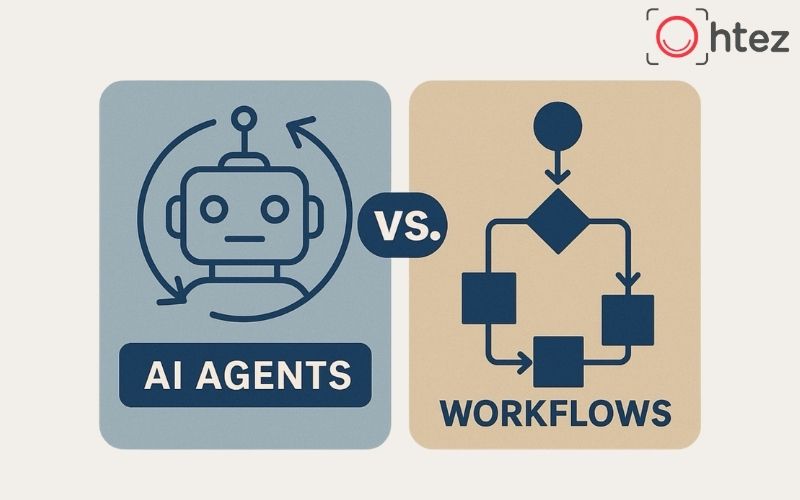
Overview of AI Agent vs Workflow
AI Agent vs Workflow are two approaches to automation using artificial intelligence. A Workflow follows a sequence of predefined steps, while an Agent can independently select actions based on its objective and available data. Understanding AI Agent vs Workflow correctly helps businesses balance stability, control, and flexibility within their AI systems.
What is AI Workflow?
An AI Workflow is a process with predefined steps, conditions, and outputs. The system receives data, calls an AI model, and then passes the result to the next step. In AI Agent vs Workflow, Workflow stands out because it is easier to test, allows costs to be predicted, and maintains consistent results. This orchestration model is suitable for repetitive tasks with clear logic.
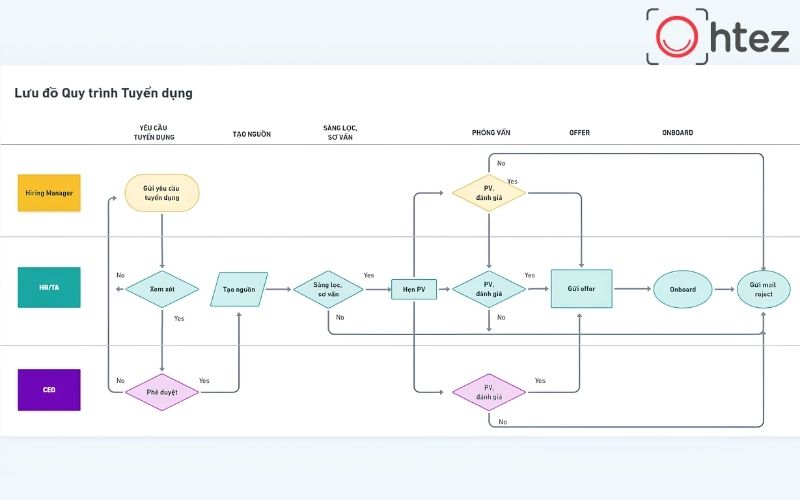
What is an AI Workflow?
What is an AI Agent?
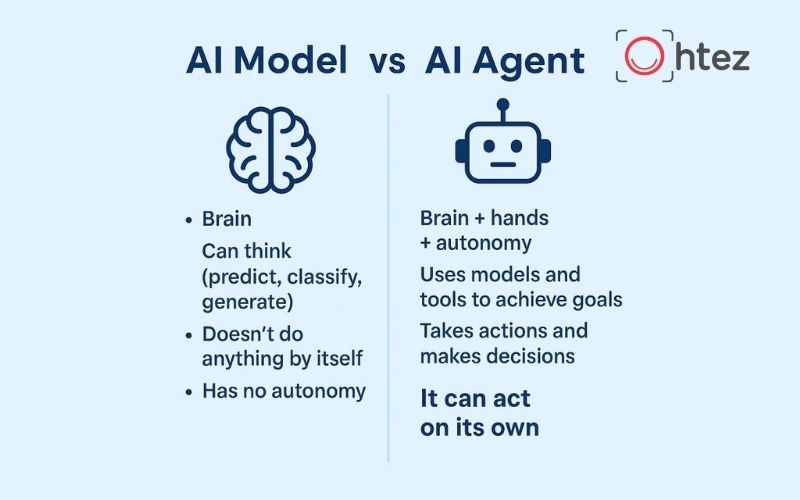
An AI Agent is a system that can observe a situation, reason, and select actions to achieve an objective. An Agent can also use APIs, databases, or business software. When evaluating AI Agent vs Workflow, an Agent is more suitable for open-ended tasks involving multiple variables where the entire process is difficult to define in advance. Autonomy is its most important characteristic.
What are AI Agents?
Why are these two models often confused?
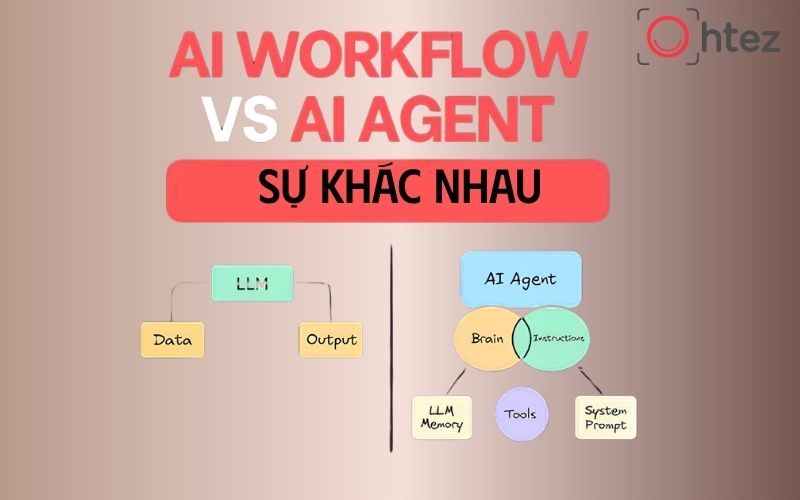
Both models can use LLMs, APIs, data, and automation tools, so they are often considered the same. The key difference in AI Agent vs Workflow lies in who decides the next step. When humans design the processing flow in advance, the system is generally a Workflow. When the system independently chooses actions according to an objective, it is closer to an agentic system.
How an AI Workflow operates
An AI Workflow divides a large task into smaller steps with clearly defined inputs, conditions, and outputs. In AI Agent vs Workflow, a Workflow resembles a controlled processing pipeline. Each step can be monitored and tested independently. Three common models in AI Agent vs Workflow are prompt chaining, routing, and parallel processing.
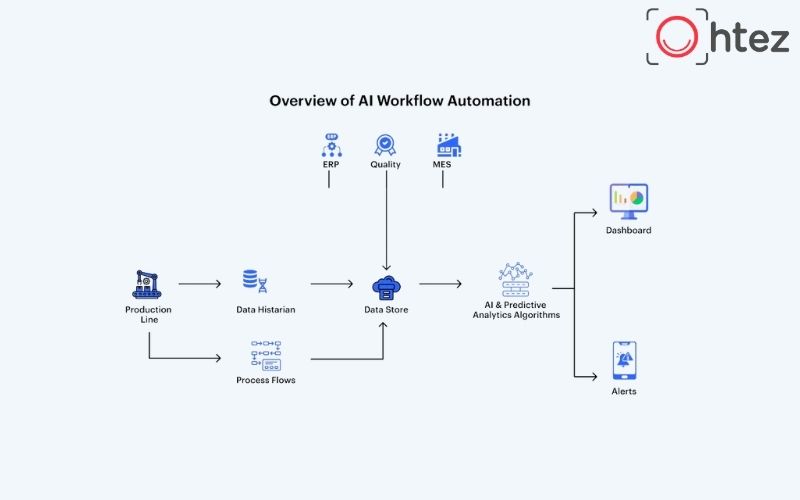
How AI Workflow works
1. A step-by-step prompt sequence
A prompt sequence breaks down a complex request into multiple consecutive processing steps. The result of the previous step becomes the data for the next step. For example, a system may summarize feedback, identify the issue, and then generate a response. In AI Agent vs Workflow, prompt chaining is suitable for tasks with a clear sequence that require quality checks at each stage.
2. Routing tasks based on conditions
Routing directs data to the appropriate processing branch based on established conditions. A technical request may be routed to the product department, while a refund request is sent to the finance department. In AI Agent vs Workflow, routing still belongs to Workflow because the selection criteria have already been defined. This approach is suitable for processes with many cases but stable logic.
3. Processing multiple workflows in parallel
Parallel processing allows several tasks to run at the same time. A system may simultaneously check for errors, analyze sentiment, and extract data from a single input. In AI Agent vs Workflow, parallelization improves processing speed without giving the system greater autonomy. This model is effective when the branches are independent and their results can be combined at the end of the process.
How an AI Agent operates
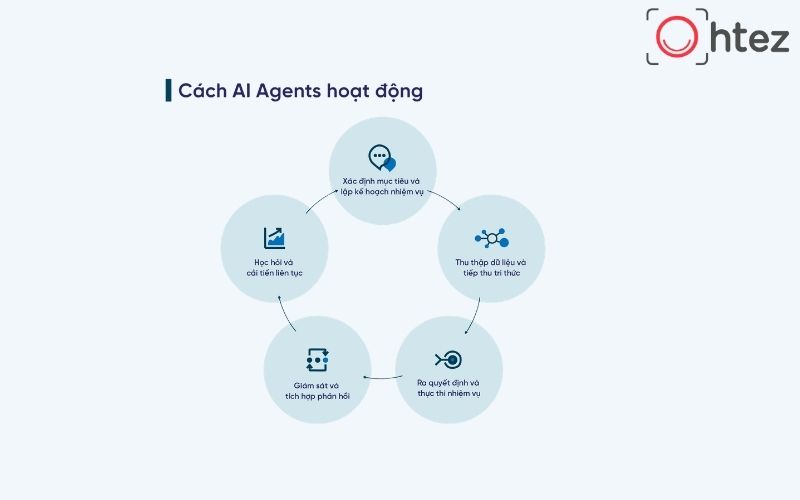
An AI Agent usually operates through a loop rather than a fixed sequence of steps. The system receives an objective, observes the current state, selects an action, and then evaluates the result. Compared with Workflow, AI Agent vs Workflow stands out because an Agent can adjust its own plan. However, implementing AI Agent vs Workflow still requires permission limits, monitoring mechanisms, and clearly defined stopping criteria.
How an AI Agent operates
1. The observation, reasoning, and action loop
An Agent’s loop consists of observation, reasoning, action, and feedback. The Agent reads the current data, identifies the gap between the current state and the objective, and then selects the next step. After each action, the system evaluates the result to determine whether it should continue or change direction. In AI Agent vs Workflow, the reasoning loop is the core difference because the Agent does not need a complete path from the beginning.
2. The ability to use tools automatically
An Agent can call APIs, read internal data, update a CRM, or create documents. Tools allow the system to move beyond simply generating answers and perform real actions. When implementing AI Agent vs Workflow, businesses must clearly restrict the tools, data, and actions available to the system. The more powerful the tool-calling capability becomes, the greater the need for permission controls and activity logs.
3. The role of memory and state
Memory allows an Agent to retain information from previous steps or interactions. State indicates where the system currently is in the process of completing its objective. In AI Agent vs Workflow, memory helps an Agent maintain context and avoid repeating actions. However, stored data must be controlled in terms of retention period, access permissions, and accuracy.
The difference between AI Agent vs. Workflow
AI Agent vs Workflow: The Differences
The differences between AI Agent vs Workflow mainly involve control, autonomy, monitoring capabilities, and operating costs. An AI Workflow follows predefined steps, while an AI Agent can independently select actions based on its objective and the actual situation. The table below helps businesses understand the characteristics of each model before implementation.
| Criteria | AI Workflow | AI Agent |
| How it works | Follow the sequence of steps and conditions that have been set beforehand. | Define and adjust the steps to achieve your goal. |
| Control | The designer controls the entire processing flow. | The system automatically decides the next step within the allowed scope. |
| Level of autonomy | Low to medium intensity, only works within available branches. | Medium to high, planning and changing the course of action is possible. |
| Adaptability | Suitable for stable, predictable situations. | Handles open-ended tasks with multiple variables effectively. |
| Use the tool | The tool is called at fixed points in the process. | Choose the tools, when to use them, and the appropriate parameters. |
| Memory and State | Save the data in predefined steps. | They can remember the context and results from previous actions. |
| Track activity | The step where the error occurred is easy to identify thanks to the clear input and output. | It’s necessary to monitor tool calls, their status, loops, and the rationale behind the decision. |
| Error correction capability | Easy to test and fix step by step independently. | It’s difficult to reproduce the error because the action flow can change with each run. |
| Operating costs | Relatively stable and easy to predict. | This can vary depending on the number of inference rounds and tool calls. |
| Latency | Easy to control because the number of steps is relatively fixed. | Response times may be slow if reasoning is required or multiple tools are used. |
| Stability | High standards are associated with repetitive tasks and clear rules. | More flexible, but the results may be inconsistent. |
| Risk | Lower due to limited operating range. | Higher if access or actions are granted too broadly. |
| Suitable application | Process forms, categorize data, generate reports, and synchronize information. | Research, planning, decision support, and handling complex situations. |
When should businesses choose AI Agent vs Workflow?
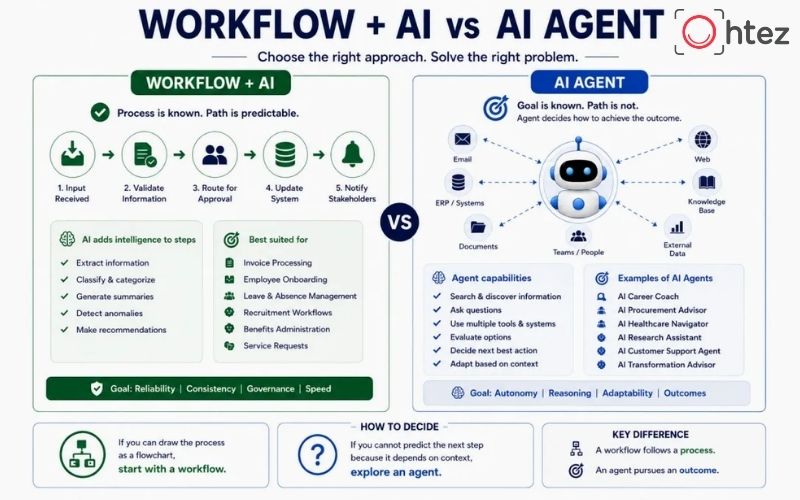
The choice between AI Agent vs Workflow should be based on the characteristics of the task rather than current technology trends. Workflow is suitable for processes that are clear, repetitive, and have fixed outputs. An AI Agent is more appropriate for open-ended tasks involving multiple variables and requiring the system to adjust its processing approach. Businesses can also combine the two models by using Workflow to control the overall process framework and an Agent for stages that require flexible decision-making.
Tasks suited to an AI Workflow
An AI Workflow is suitable for tasks with clearly defined processes, conditions, and output standards. The system only needs to follow the designed steps without developing a new plan.
Common applications include:
- Classifying emails or customer requests.
- Processing forms and entering data.
- Generating scheduled reports.
- Reviewing content according to a checklist.
- Synchronizing data between software platforms.
- Forwarding requests to the appropriate department.
- Sending notifications when specific conditions are met.
Workflow is the right choice when a business prioritizes stability, control, and consistent results. This model is also easier to test, hand over, and estimate costs for.
Tasks suited to an AI Workflow
Tasks that should be implemented with an AI Agent
An AI Agent is suitable for tasks that cannot be fully described through fixed steps. The system can observe the situation, select tools, and adjust its plan based on actual results.
Suitable use cases include:
- Researching and consolidating information from multiple sources.
- Analyzing the cause of a problem.
- Developing plans based on changing data.
- Supporting incident resolution without a predefined script.
- Recommending solutions according to business objectives.
- Performing tasks that require multiple reasoning cycles.
- Coordinating multiple tools to achieve an objective.
For example, an AI Agent can analyze sales data, identify product groups experiencing declining revenue, investigate the causes, and recommend improvements. When comparing AI Agent vs Workflow, an Agent delivers greater value when the task requires a high level of adaptability.
Considerations when implementing AI Agent vs Workflow
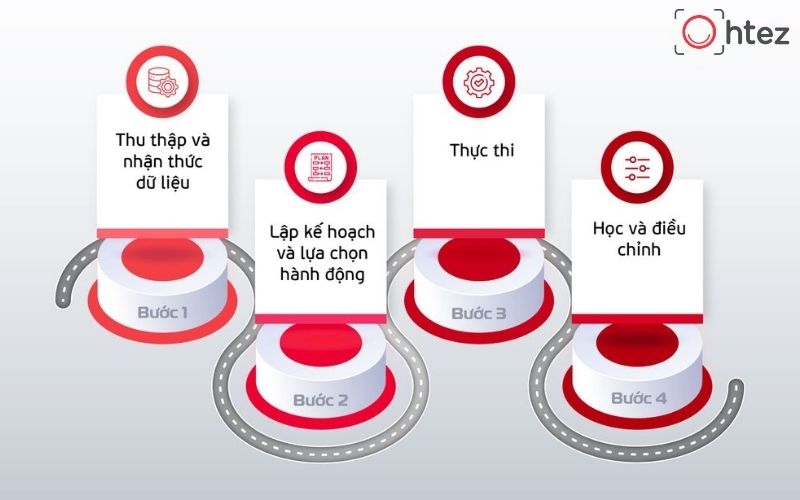
The implementation of AI Agent vs Workflow should begin with a small use case, clearly defined data, and specific performance metrics. Businesses should not grant excessively broad automation permissions from the beginning. Instead, implementation should be divided into stages to reduce risks and evaluate performance before expansion.
- Establish limits and fallback mechanisms: Limit the number of steps, execution time, and scope of system actions. When AI does not have enough data or produces an unreliable result, the task should be transferred to a human.
- Control data and access permissions: Grant only the permissions required by the Agent or Workflow, and review input data to reduce risks and improve security.
- Measure performance: Monitor metrics such as processing time, accuracy, cost, and the percentage of tasks requiring human intervention before deploying the system at scale.
Considerations when implementing AI Agent vs Workflow
AI Agent solutions tailored to business needs at Ohtez
Ohtez provides AI Agent solutions designed around the actual operating processes and objectives of each business. By analyzing AI Agent vs Workflow, the team identifies which tasks should follow a fixed flow and which require reasoning and flexible adaptation.
Instead of only developing systems that answer simple questions, Ohtez builds AI Agents that can connect to data, use tools, and perform multi-step business operations. These solutions help businesses reduce manual work, improve processing speed, and minimize operational errors.
Key features of Ohtez’s solution include:
- Developing AI Agents for specific business functions such as Marketing, E-commerce, Logistics, and internal management.
- Designing customized systems according to each business’s processes, data, and objectives.
- Connecting Google Sheets, HubSpot, Shopify, Meta, ERP, and platforms that support APIs.
- Automating data entry, report consolidation, information verification, and task coordination.
- Establishing clear access permissions, approval stages, and monitoring mechanisms.
- Providing support from assessment and consultation to implementation, training, and system optimization.
Based on the AI Agent vs Workflow use case, Ohtez can implement a Workflow, an AI Agent, or a hybrid architecture. This approach helps businesses maintain stability at critical stages while benefiting from AI’s flexibility in tasks requiring analysis and decision-making.
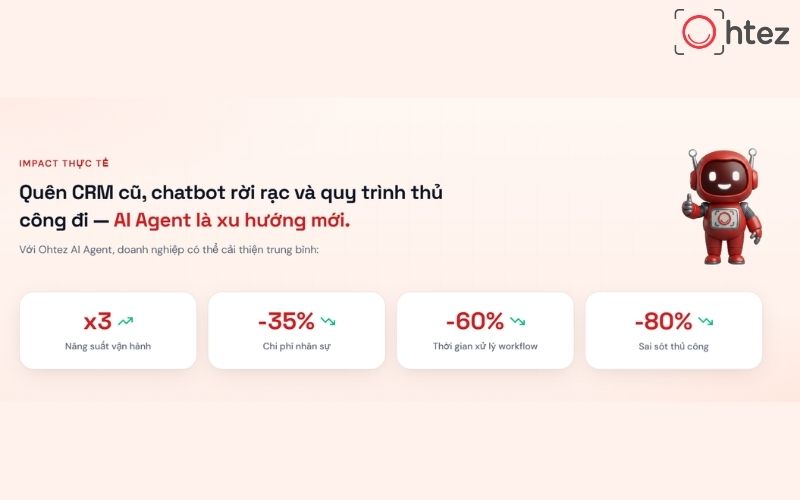
AI Agent solutions tailored to business needs at Ohtez
No single model is better in every situation when comparing AI Agent vs Workflow. Workflow is suitable for stable processes, while an AI Agent performs effectively in tasks that require reasoning and adaptation. Businesses should evaluate the objective, data, and complexity of each task before selecting or combining the two models. When a company needs an AI Agent solution tailored to its actual requirements, Ohtez is ready to provide consultation and implementation aligned with its operating processes/