
How can you build an intelligent work automation engine instead of relying only on conventional reactive chatbots? Learning how to create an AI Agent is becoming a top priority for businesses and developers in the digital age. Mastering how to create an AI Agent with a technically sound approach not only helps optimize operational workflows but also unlocks flexible reasoning, data access, and code execution capabilities. If you are unsure where to begin, the following guide to how to create an AI Agent provides a complete roadmap, from setting up the architecture and choosing a framework to deploying the safest possible execution environment. Join Ohtez as we explore how to create an AI Agent from start to finish.
![How to create a technically sound AI agent for automation [Complete 2026]](https://ohtez.vnbro.com/wp-content/uploads/2026/07/how-to-create-an-ai-agent-1.jpg)
What is an AI Agent?
Before learning how to create an AI Agent, we first need to discuss LLMs – the core “brain” behind today’s AI Agents. You are probably already familiar with AI Agents and LLM-powered tools such as ChatGPT, Gemini, and Copilot. Let us review their capabilities before exploring how to create an AI Agent:
- Contextual understanding: In the sentence “I dropped my key while running into the house,” the model understands that “key” refers to a physical object rather than “the key to success.” This is an important capability when learning how to create an AI Agent.
- Natural language generation: LLMs can generate creative and flexible content, providing a foundation for creating a free AI Agent for writing tasks.
- Summarization: The model can condense a 20-page article into 200 words, supporting how to create an AI Agent that processes data quickly.
- Language translation: LLMs can translate multilingual technical documents with a high level of accuracy.
- Question answering: The system can answer queries instantly, such as “What is the speed of light?” with “299,792 km/s.”
- Information extraction: LLMs can automatically extract times and locations from original text, making this an effective capability when applying how to create an AI Agent in business.
- Intent recognition: The model can identify a user’s objective and initiate automated actions within the process of how to create an AI Agent.
- Text classification: AI can automatically filter spam emails or analyze the sentiment of customer feedback.
- Language reasoning: The system can generate logical answers based on available information without requiring hardcoded programming.
- Transfer learning: The model can effectively apply knowledge from one language or context to another.
- Multilingual creativity: It can write an English article while incorporating a natural Vietnamese headline.
- Multimodal integration: The system can interpret images and sales charts to produce in-depth analysis.
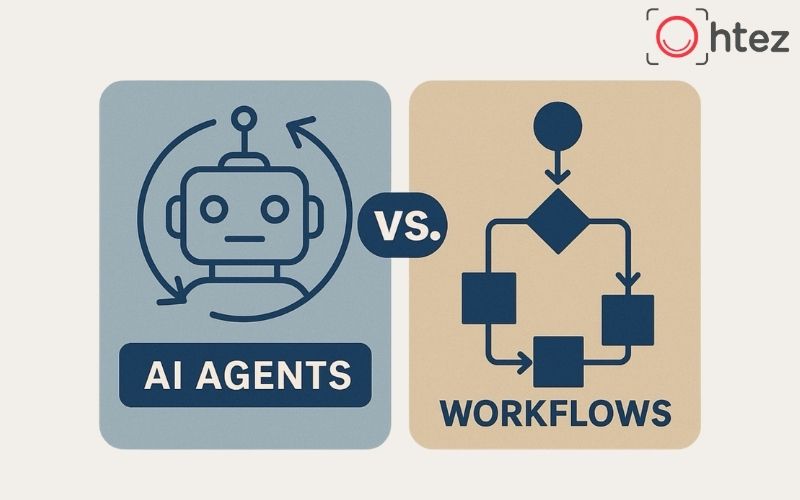
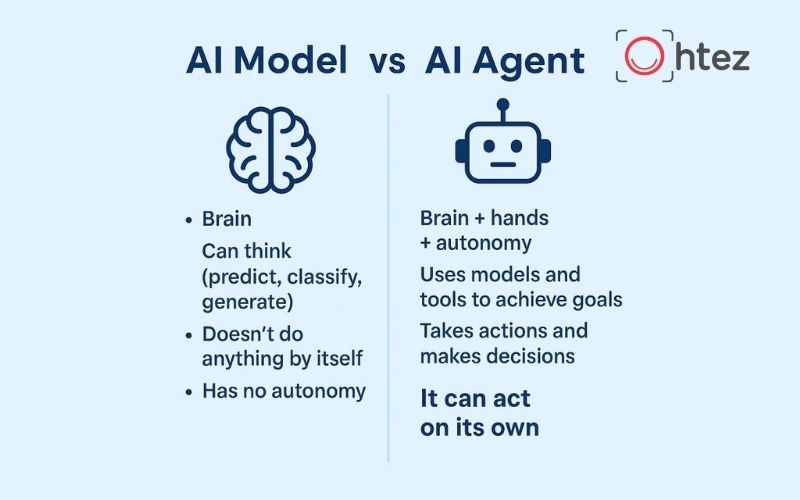
So, what is an AI Agent, and how does learning how to create an AI Agent differ from using a conventional model? An AI Agent is an automated system designed to perceive, reason, and act with AI – usually with an LLM as its foundation—to solve real-world tasks. Understanding how to create an AI Agent helps you optimize operations rather than simply use basic virtual assistants.
Overall, today’s AI Agents use LLMs as their “brains” to perform complex tasks. Without understanding the role of LLMs in how to create an AI Agent, you may only build rigid robots that follow hardcoded commands. Start exploring how to create an AI Agent, as well as methods for creating a free AI Agent, today at ohtez.com to improve your workflows.
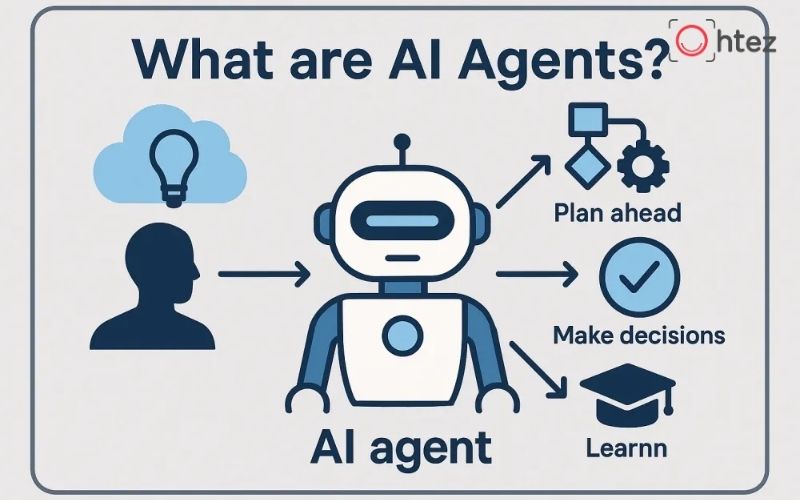
What is an AI Agent?
A beginner’s guide to how to create an AI Agent
Learning how to create an AI Agent is no longer limited to technology specialists. Understanding what an AI Agent is will help you recognize the power of this technology in business operations. With step-by-step guidance, you can learn how to create an AI Agent that operates flexibly, supports automated work, and improves the user experience. Below are seven steps explaining how to create an AI Agent, from the initial idea to real-world deployment.
Step 1. Define the specific scope of the AI Agent
The most important first step in learning how to create an AI Agent is defining its operating scope. Clearly identify the tasks the Agent will handle, the problems it will solve, and the user groups it will serve. This helps you choose the right platform and apply how to create an AI Agent effectively from the beginning.
Examples of commonly used AI Agents include:
- Sales AI Agent: Helps answer customer questions about products, recommends options, compares models, and provides detailed pricing information.
- Customer service AI Agent: Resolves issues, provides guidance through FAQs or videos, and supports technical troubleshooting.
- Knowledge management AI Agent: Retrieves internal policies, summarizes documents, and helps employees find information quickly.
- Lead generation AI Agent: Sends reminder messages through email or WhatsApp, collects information from conversations, and synchronizes it with a CRM for effective management.
- Human resources AI Agent: Answers questions about company policies, supports employee onboarding, and processes leave requests.
- E-commerce AI Agent: Tracks order status, checks product availability, and recommends suitable options based on customer preferences.
Next, define your target audience. Remember that different users have different expectations and ways of interacting with technology. For example, an AI Agent designed for healthcare professionals may need to understand and use medical terminology accurately.
Finally, review the specific use cases you are targeting to clarify the features required in how to create an AI Agent. For instance, a customer service chatbot needs to process requests and complaints, while a virtual shopping AI Agent should be able to recommend products, compare prices, and understand user preferences.
Step 2. Choose the right platform to build AI Agents.
After defining the scope and objectives, the next step in how to create an AI Agent is selecting the right platform or framework for implementation.To reduce initial costs, you can explore tools that allow you to create a free AI Agent. An ideal platform should be easy to use, support AI and LLM technologies, and offer multichannel integration so the Agent can operate flexibly across websites, email, messaging applications, and CRM systems.
- Comprehensive learning resources: The platform should provide documentation on how to create an AI Agent, practical examples, and a support community that helps you understand and deploy the Agent quickly.
- Alignment with project objectives: Make sure the platform meets your specific requirements. For example, when exploring how to create an AI Agent for sales, choose a platform capable of handling commercial conversations. For a knowledge management Agent, prioritize platforms that support search and database integration.
- Free trial options: A free AI Agent trial allows you to test the platform’s features, stability, and scalability before making a financial commitment.
- Open-source options when required: If you need greater control or advanced integrations, many open-source frameworks support how to create an AI Agent customized to specific business requirements.

How to create an AI Agent: Choose the right platform for building AI Agents
Step 3. Collect data to prepare for training AI Agents.
Just as a student learns from textbooks, researching how to create an AI Agent requires training data. High-quality data ensures that AI can understand and process user input accurately. When the data is inaccurate or low quality, AI may learn incorrect information and make mistakes.
To apply how to create an AI Agent successfully, you need to collect data that reflects the types of interactions it will have with users. This may include:
- Text records: Collect conversation records from chat logs or emails that are similar to the expected interactions with the AI.
- Audio recordings: When AI will respond to spoken commands or questions, audio recordings are necessary to help it understand different tones, intonations, and speech patterns.
- Interaction logs: Data from previous interactions with existing AI Agents or similar systems can provide insights into user behavior and common questions or commands.
After obtaining the data, it’s necessary to clean it by removing irrelevant or inaccurate data, correcting errors, and ensuring consistency across the entire dataset. For example, correcting spelling errors in text records or filtering out background noise in audio recordings.
Finally, data labeling should be included as part of how to create an AI Agent, helping the system understand the context and purpose of user requests. For example, a piece of text can be labeled with a user intent such as “book a flight” or “ask about store opening hours.”

How to create an AI Agent: Collect data to prepare for AI Agent training
Step 4. Connect the AI Agent to data and systems
An AI Agent is only truly useful when it can access and use real information from internal data sources and business systems. This integration is a core part of how to create an AI Agent, allowing the system to provide accurate and timely answers while automating tasks within business workflows.
Connect to a knowledge base
To understand what an AI Agent is in an enterprise environment, you need to see how it uses specialized information when connected to the company’s knowledge base. This knowledge base may include product databases, user manuals, internal policies, or enterprise search systems. When how to create an AI Agent incorporates Retrieval-Augmented Generation, or RAG, the Agent can retrieve and consolidate data from multiple sources to generate complete, up-to-date, and contextually relevant answers.
Integrate communication channels
As part of learning how to create an AI Agent, you need to give the Agent the ability to interact with users through multiple channels, including websites, mobile applications, WhatsApp, Discord, and email. Depending on your needs, an agent can operate simultaneously on multiple channels, ensuring consistent, fast, and seamless information and responses.
Connect to business platforms and software
Through a flexible approach to how to create an AI Agent, the system can be deeply integrated with platforms such as CRM, ERP management systems, customer service tools, and marketing automation software. This allows agents to not only answer questions but also perform tasks like updating customer data, tracking orders, and sending automated messages based on user behavior.
Step 5. Test and refine continuously
For how to create an AI Agent to produce accurate results and meet user needs, continuous testing and refinement are essential. This process helps identify errors, optimize answers, and improve interaction quality, ensuring that the AI Agent continues to operate reliably.
- Use a simulator for testing: Interact directly with the Agent in a test environment during the practical stage of how to create an AI Agent to review conversation scenarios, identify issues, and evaluate the user experience.
- Refine and optimize responses: Correct errors, improve response content, and update conversation rules so the AI Agent operates logically, accurately, and in line with its objectives.
- Continue testing after deployment: Monitor real-world performance, add new data, and update the model so the AI Agent continues to improve over time.
Step 6. Deploy the AI Agent across real-world channels
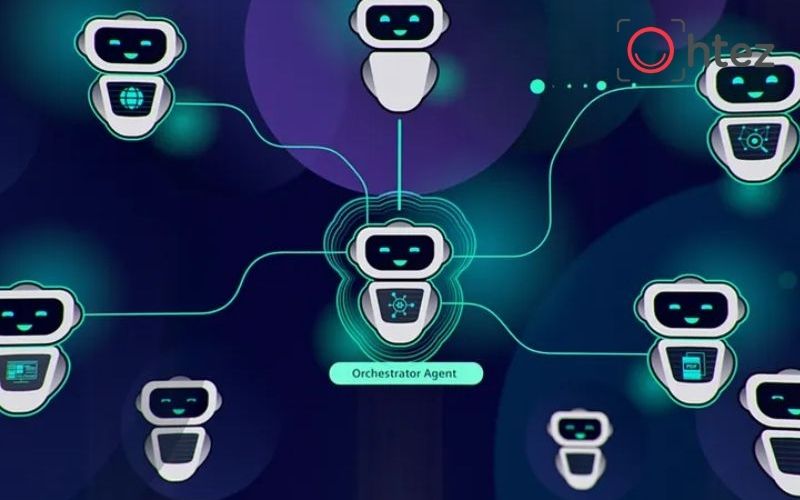
After completing and testing how to create an AI Agent, the next step is deploying it in a real-world environment. Proper deployment allows the Agent to reach users quickly, support automation objectives, and assist customers. Whether you use a paid platform or a platform that allows you to create a free AI Agent, managing several Agents simultaneously requires a suitable task distribution flow to ensure that every request is processed accurately.
- Deploy it on social media and messaging applications: Connect the AI Agent to Zalo, Facebook Messenger, WhatsApp, Telegram, or Instagram to extend its reach.
- Integrate it with business applications: Similar to today’s AI Agents, it can operate through Slack, Teams, or internal software to support employees in their workflows.
- Share it through a URL or landing page: Provide a direct link that allows users to test or interact with the Agent without a complicated installation process.
- Manage a multi-Agent system: When deploying several AI Agents simultaneously, configure routing so requests are directed to the correct Agent, preventing duplication or confusion.
- Inform and guide users: Clearly explain what the AI Agent is, its functions, and how to use it so users can understand its value, increasing engagement and application effectiveness.

How to create an AI Agent: Deploy the AI Agent across real-world channels
Step 7. Monitor performance and update regularly.
Completing the guide to how to create an AI Agent is only the beginning. The process of making the Agent genuinely smarter and more useful starts after it becomes operational. You need to monitor the AI agent’s performance to ensure it accurately answers queries. Interactive data helps you identify weaknesses and improve responsiveness.
In addition, user feedback will help you adjust the content and flow of the conversation. The error logging system will notify you when problems occur, allowing you to promptly train or update the agent’s knowledge, thereby improving the efficiency and intelligence of the AI agent.
Core technologies used to build and train AI Agents
Mastering a standard process for how to create an AI Agent is directly connected to teaching the system to understand and respond to human language, with business data playing a central role. Before exploring how to create an AI Agent in greater depth, you need to understand what an AI Agent is and how it differs from conventional chatbot tools. The process combines several areas of artificial intelligence, from Generative AI and Conversational AI to machine learning and natural language processing. When you apply how to create an AI Agent correctly, you can even use open-source platforms to create a free AI Agent for your work.Below are the core technologies that support today’s AI Agents.
Machine Learning
Machine learning, or ML, is an important foundation in the process of how to create an AI Agent. It enables the system to learn and improve automatically from experience without requiring manual programming. When practicing how to create an AI Agent, machine learning algorithms process historical interaction data to identify patterns and make decisions. Whether you choose an advanced approach to how to create an AI Agent or explore a free AI Agent solution for your business, providing a large amount of accurate data helps the Agent predict and respond to user requests more effectively over time.
Machine Learning
Natural language processing
Natural language processing, or NLP, is an essential component when researching how to create an AI Agent that operates intelligently. NLP enables computers to receive, analyze, and interpret large volumes of natural-language data. By applying NLP correctly within how to create an AI Agent, the system can generate fluent, contextually appropriate responses that resemble human communication. This is also one of the core technologies that makes today’s AI Agents more advanced than previous generations of virtual assistants.
Data labeling
Data labeling is a preparation stage that plays a decisive role in the success of how to create an AI Agent. The process adds semantic labels to raw data so the AI can clearly understand user intent. When implementing how to create an AI Agent, data labeling may include assigning parts-of-speech tags, analyzing text sentiment, or classifying queries by topic. By applying how to create an AI Agent correctly and combining it with high-quality data labeling, you can successfully build an AI assistant that operates smoothly and delivers a high level of accuracy.
When you need consulting, design, and development services for a specialized business AI assistant, contact the Ohtez expert team for the most suitable support.